
 By abdul aziz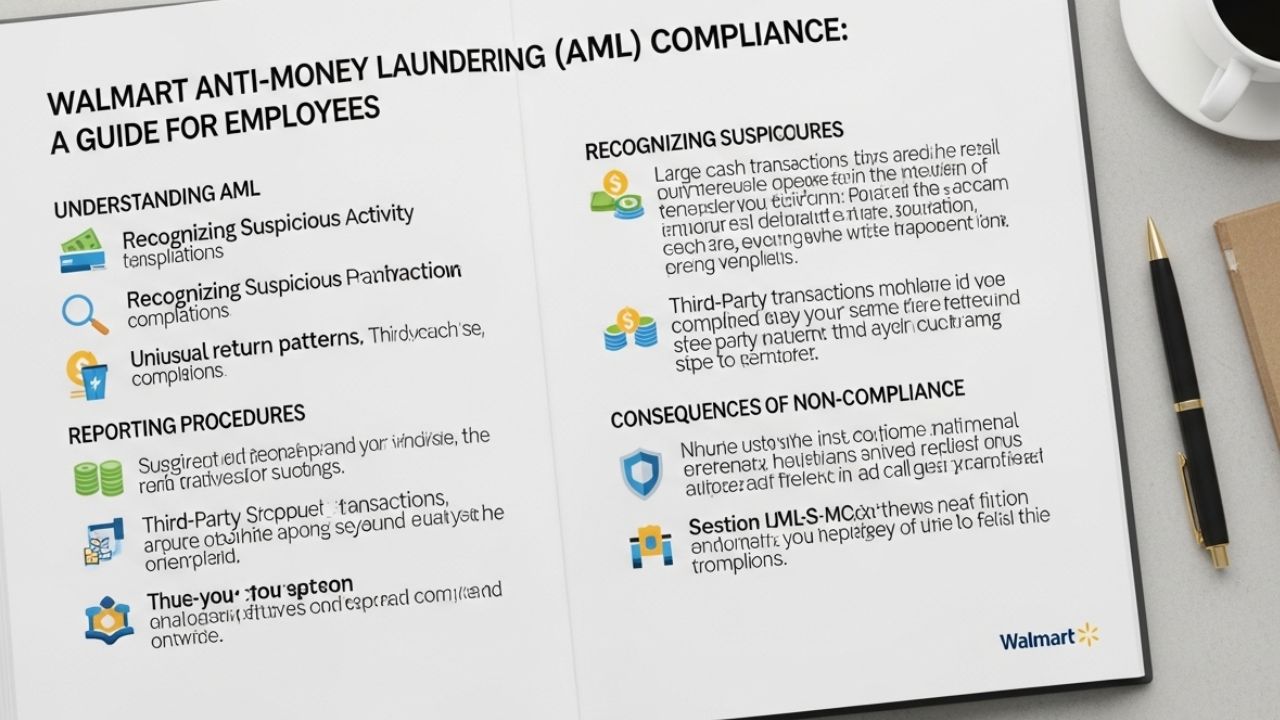
Financial crimes are a critical concern in retail banking and cash-handling operations. Walmart, as one of the largest retailers in the world, takes these risks seriously by implementing an Anti-Money Laundering (AML) program. The Walmart Anti Money Laundering CBL answers refer to the key guidelines and insights provided in Walmart’s computer-based learning (CBL) module that employees use to understand AML regulations, compliance expectations, and reporting procedures.
The CBL ensures that associates handling financial transactions are aware of suspicious activity patterns, regulatory compliance requirements, and Walmart’s internal procedures to prevent money laundering. Understanding these answers is essential for employees to pass training and effectively maintain Walmart’s compliance standards.
What Is the Walmart Anti Money Laundering CBL?
The Walmart Anti Money Laundering CBL is an interactive training module that educates employees about:
- Federal regulations regarding money laundering, including the Bank Secrecy Act (BSA) and the USA PATRIOT Act
- Walmart policies for detecting and reporting suspicious activity
- Procedures for monitoring cash transactions and money service activities
- How to escalate potential risks to management or compliance teams
This training is mandatory for associates in roles that handle cash, money orders, or other financial services. By completing the module, employees gain the knowledge needed to detect and report suspicious behavior and ensure Walmart remains compliant with federal laws.
Key Components of Walmart Anti Money Laundering CBL Answers
1. Recognizing Suspicious Activity
The CBL emphasizes recognizing signs of money laundering, such as:
- Frequent large cash deposits or withdrawals
- Transactions structured to avoid reporting thresholds
- Repeated money transfers to multiple accounts
- Unusual customer behavior during transactions
By understanding these signs, employees can take action to report suspicious activities promptly.
2. Reporting Procedures
The Walmart Anti Money Laundering CBL answers provide clear instructions for reporting suspicious activity:
- Notify a supervisor or the store compliance officer immediately
- Document all relevant transaction details accurately
- Follow Walmart’s internal escalation process
Prompt reporting is crucial for regulatory compliance and helps Walmart prevent financial crimes.
3. Compliance with Federal Regulations
Employees are trained to follow federal and state laws, including:
- Bank Secrecy Act (BSA)
- USA PATRIOT Act
- Guidance from the Financial Crimes Enforcement Network (FinCEN)
Compliance ensures Walmart avoids regulatory penalties and maintains a trustworthy financial environment for its customers.
Common Walmart Anti Money Laundering CBL Answers and Guidelines
While exact scenarios may vary, common Walmart Anti Money Laundering CBL answers include:
- Always verify customer ID for large or unusual transactions
- Report transactions that appear structured to avoid reporting requirements
- Be alert for unusual patterns of frequent high-value cash transactions
- Never falsify or ignore records
- Escalate suspicious activity according to company procedures
Following these guidelines ensures employees understand both the content of the training and its practical application in daily operations.
Best Practices for Walmart Employees
1. Stay Informed About Policy Updates
AML regulations can change frequently. Employees should regularly review Walmart’s compliance policies to stay current.
2. Observe Customer Behavior
Pay attention to transaction patterns and unusual behaviors that may indicate fraudulent activity.
3. Document Thoroughly
Keeping detailed records of transactions and reports is essential for compliance audits and internal reviews.
4. Participate in Continuous Learning
Walmart updates CBL modules periodically. Continuous learning ensures employees understand new procedures and compliance requirements.
Importance of Walmart Anti Money Laundering CBL Answers
Completing the Walmart Anti Money Laundering CBL and understanding its answers helps Walmart:
- Protect against financial crimes and fraudulent activity
- Avoid penalties from regulatory authorities
- Maintain public trust and credibility
- Ensure consistent compliance across all stores
The answers serve not only as a training tool but also as a practical guide for employees when handling real-world transactions.
Challenges and Solutions
1. Complex Regulatory Requirements
AML regulations are complex, but Walmart CBL simplifies them into practical, actionable lessons for associates.
2. Detecting Sophisticated Schemes
Criminals may use advanced money laundering techniques. The CBL provides examples and training exercises to help employees recognize subtle suspicious activities.
3. Consistency Across Locations
With thousands of stores, maintaining consistent compliance is challenging. Mandatory CBL training and periodic audits help ensure all associates adhere to Walmart’s AML standards.
Conclusion:
The Walmart Anti Mo ney Laundering CBL answers are essential for employees to understand their responsibilities in preventing financial crimes. Through proper training, observation, reporting, and compliance, Walmart employees help safeguard the company, customers, and regulatory integrity.
AML training at Walmart goes beyond procedural requirements; it ensures employees can act confidently when encountering suspicious activity. Mastering the CBL answers enhances compliance, reduces risk, and demonstrates Walmart’s commitment to maintaining a secure and lawful financial environment.
By applying the knowledge gained from the Walmart Anti Money Laundering CBL, associates contribute to the company’s reputation and help create a safe financial environment for everyone.