
 By abdul aziz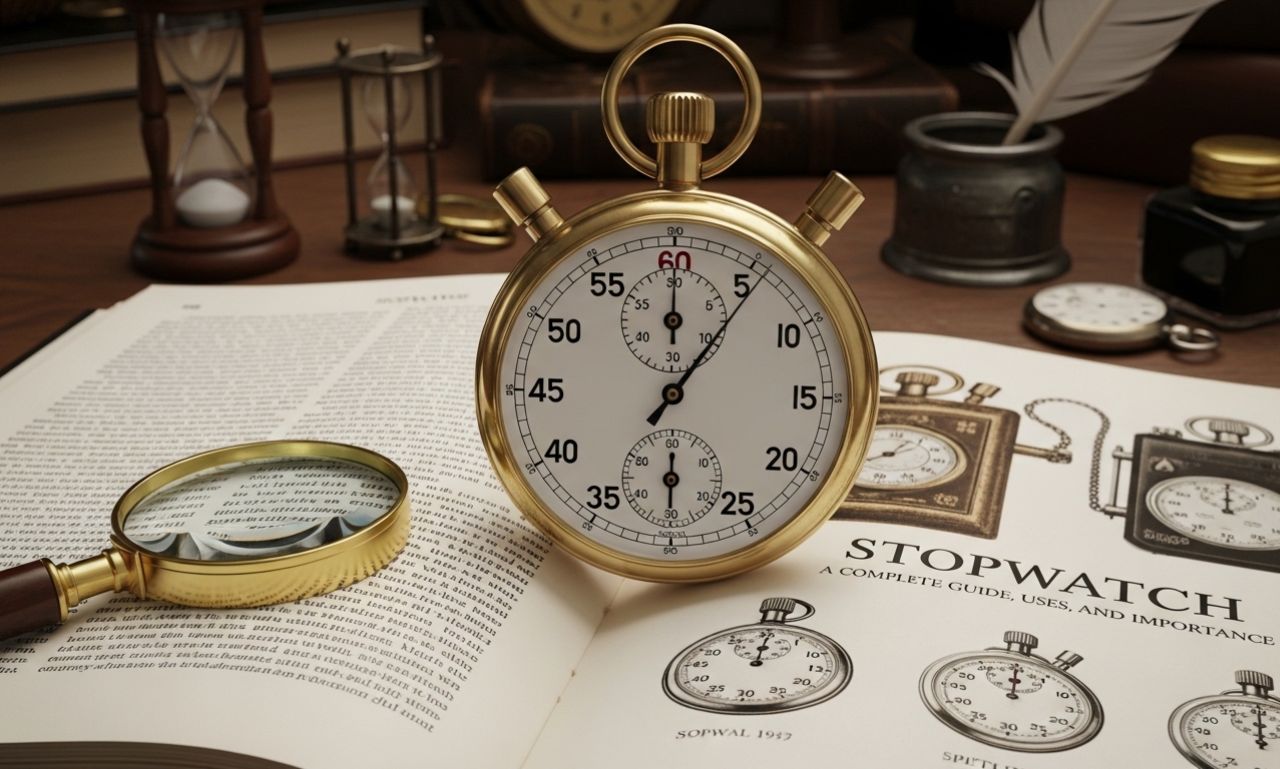
A stopwatch is a simple yet powerful timekeeping device used to measure the amount of time that passes between its activation and deactivation. Whether you are timing a race, tracking workout intervals, conducting scientific experiments, or managing daily tasks, a stopwatch provides precise and reliable time measurement. Over the years, this tool has evolved from mechanical devices to advanced digital and smartphone-based systems.
In this comprehensive article, we will explore what a stopwatch is, how it works, its history, types, features, and practical applications in modern life.
What Is a Stopwatch?
A stopwatch is a handheld or digital device designed to measure elapsed time. Unlike a regular clock that continuously displays the current time of day, a stopwatch is activated manually to start counting from zero. It can be stopped, paused, and reset depending on the user’s needs.
Stopwatches are widely used in sports competitions, laboratories, classrooms, industrial settings, and even personal productivity routines.
History of the Stopwatch
The stopwatch has a fascinating history that reflects advancements in timekeeping technology.
Early Mechanical Timekeepers
Before modern stopwatches were invented, time measurement relied on sundials, water clocks, and mechanical clocks. These devices were not suitable for precise short-duration timing.
The development of mechanical pocket watches in the 18th and 19th centuries laid the foundation for specialized timing instruments.
Emergence of Mechanical Stopwatch
In the 19th century, watchmakers began designing timepieces specifically for measuring intervals. One of the most famous early manufacturers was TAG Heuer, which played a significant role in developing precision timing devices for sports.
Mechanical stopwatches became essential in athletic competitions and industrial time studies.
Digital Revolution
The late 20th century introduced digital technology, transforming the traditional stopwatch into an electronic device with greater accuracy. Digital stopwatches eliminated mechanical gears and relied on quartz technology, providing improved precision and durability.
Today, many smartphones include built-in stopwatch applications, making the tool accessible to everyone.
Types of Stopwatch
There are several types of stopwatch devices available, each designed for specific purposes.
1. Mechanical Stopwatch
Mechanical stopwatches use gears and springs to measure time. They require manual winding and are appreciated for their craftsmanship and classic design.
Advantages:
-
Durable metal construction
-
No batteries required
-
Vintage appeal
Disadvantages:
-
Less accurate than digital models
-
Requires regular maintenance
2. Digital Stopwatch
Digital stopwatches use electronic circuits and LCD displays to show time in hours, minutes, seconds, and milliseconds.
Advantages:
-
Highly accurate
-
Easy-to-read display
-
Lightweight and portable
Disadvantages:
-
Requires batteries
-
May be sensitive to water or impact
3. Smartphone Stopwatch Apps
Modern smartphones have integrated stopwatch features. For example, devices running Android or iOS include built-in clock apps with stopwatch functionality.
These apps provide convenience, lap tracking, and data sharing options.
How a Stopwatch Works
The functionality of a stopwatch depends on its type.
Mechanical Operation
Mechanical stopwatches operate through a system of gears powered by a wound spring. When the start button is pressed, the gears begin moving, advancing the hands on the dial. Pressing the stop button halts the movement, and reset returns the hands to zero.
Digital Operation
Digital stopwatches use quartz oscillators to maintain precise time intervals. When activated, the device counts electronic pulses and displays the elapsed time on a digital screen.
This electronic system ensures high accuracy, often measured to one-hundredth or one-thousandth of a second.
Common Features of a Stopwatch
Modern stopwatch devices include several useful features:
Start/Stop Button
Begins and pauses time measurement.
Reset Button
Returns the display to zero.
Lap or Split Time Function
Allows users to record intermediate times without stopping the main timer. This is especially useful in races or interval training.
Water Resistance
Many sports stopwatches are water-resistant, making them suitable for swimming or outdoor activities.
Uses of a Stopwatch
The stopwatch plays an essential role in many areas of life.
Sports and Athletics
Athletes rely on stopwatches to measure performance in running, swimming, cycling, and other competitive sports. Major sporting events such as the Olympic Games use advanced timing systems to record results accurately.
Coaches and trainers also use stopwatches during practice sessions to track improvement.
Education
Teachers often use stopwatches for classroom activities, timed quizzes, and science experiments.
Scientific Research
In laboratories, precise time measurement is critical. Researchers use stop watches to record reaction times, chemical processes, and experiment durations.
Fitness and Personal Training
Interval training, circuit workouts, and high-intensity exercises depend heavily on accurate time tracking. A stopwatch helps maintain discipline and consistency.
Industrial and Workplace Use
In manufacturing and productivity analysis, stop watches are used for time-motion studies. These studies help improve efficiency by measuring how long specific tasks take.
Advantages of Using a Stopwatch
Using a stop watch provides several benefits:
-
Accuracy – Measures short intervals precisely.
-
Efficiency – Helps manage tasks and schedules.
-
Performance Tracking – Enables comparison and progress monitoring.
-
Portability – Easy to carry and operate.
These advantages make the stopwatch a versatile and reliable tool.
Choosing the Right Stopwatch
When selecting a stop watch, consider the following factors:
Purpose
Are you using it for sports, education, or professional research?
Accuracy Level
Digital models generally offer higher precision.
Durability
Choose water-resistant and shockproof designs for outdoor use.
Display Readability
Ensure the screen is clear and visible in different lighting conditions.
Stopwatch vs Timer: What’s the Difference?
Although often confused, a stop watch and a timer serve different purposes.
-
A stop watch measures elapsed time from zero upward.
-
A timer counts down from a preset time to zero.
Both tools are useful, but they are designed for different timing needs.
The Future of Stopwatch Technology
With technological advancements, stop watch functionality is now integrated into wearable devices such as fitness trackers and smartwatches. These devices combine timing with heart rate monitoring, GPS tracking, and performance analytics.
As technology continues to evolve, the stop watch will likely become even more integrated with artificial intelligence and performance optimization systems.
Conclusion
The stop watch is a timeless tool that has evolved from mechanical craftsmanship to digital precision. From sports competitions and scientific experiments to everyday productivity, it remains an essential device for measuring time intervals accurately.
Whether you use a traditional handheld model or a smartphone app, the stop watch continues to play a vital role in helping individuals and professionals manage time effectively. Its simplicity, reliability, and versatility ensure that it will re main an important timekeeping instrument for years to come.