
 By izzrish izz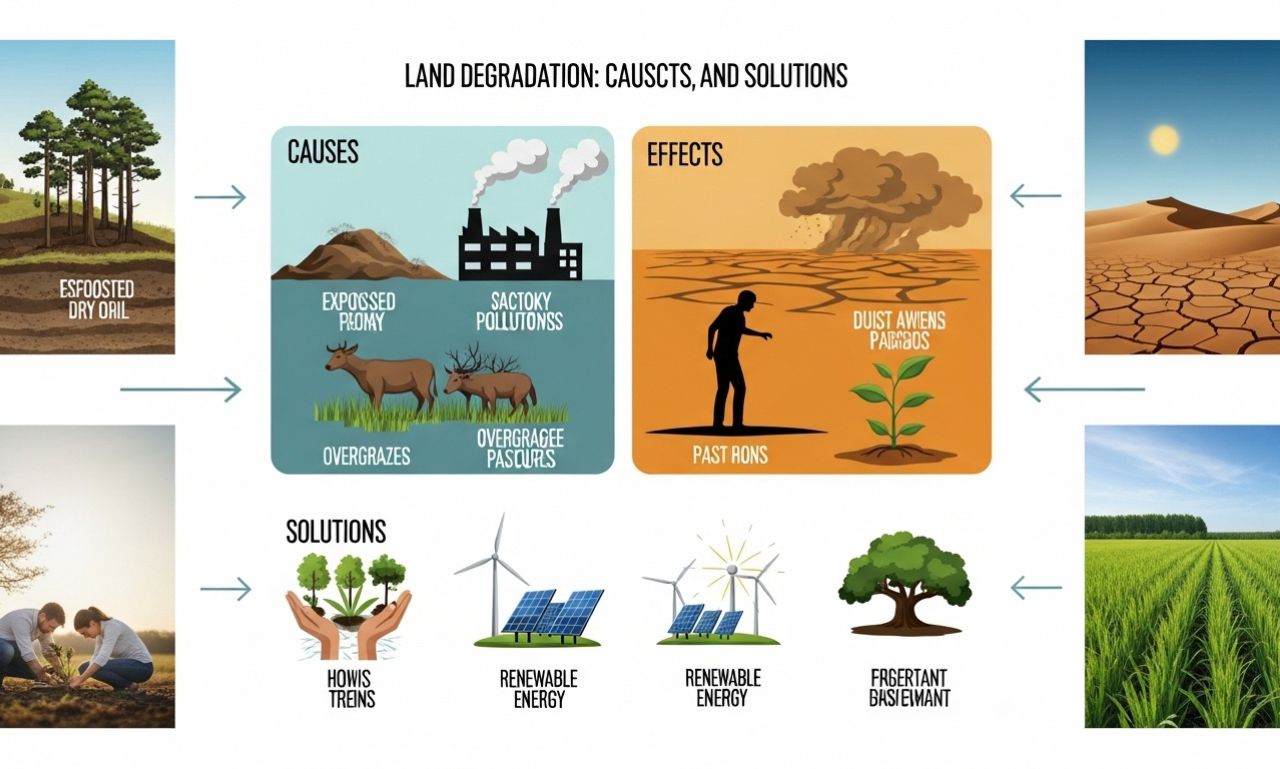
Land degradation is a critical environmental issue that affects ecosystems, agriculture, and human livelihoods worldwide. It refers to the decline in the productive capacity of land due to human activities or natural processes, resulting in reduced soil fertility, loss of vegetation, and increased vulnerability to desertification. Understanding its causes, impacts, and prevention strategies is essential for sustainable land management.
What is Land Degradation?
Land degradation occurs when land loses its ability to support ecosystems or agricultural production. It can result from:
- Soil erosion
- Loss of soil fertility
- Deforestation
- Pollution
- Unsustainable agricultural practices
It affects both rural and urban areas, leading to long-term environmental and socio-economic consequences.
Causes of Land Degradation
1. Agricultural Practices
- Overgrazing by livestock removes protective vegetation
- Excessive use of chemical fertilizers and pesticides degrades soil quality
- Monocropping and improper irrigation lead to nutrient depletion
2. Deforestation
- Clearing forests for agriculture or urban development removes tree cover
- Leads to soil erosion, reduced rainfall infiltration, and desertification
3. Industrialization and Urbanization
- Construction, mining, and industrial activities disturb the land
- Pollutants from factories and waste contaminate soil
4. Climate Change and Natural Factors
- Increased droughts, floods, and extreme weather accelerate land degradation
- Natural processes like wind and water erosion also contribute
Effects of Land Degradation
Environmental Impacts
- Loss of biodiversity due to habitat destruction
- Increased soil erosion and desertification
- Reduced water retention and soil fertility
Socio-Economic Impacts
- Decline in agricultural productivity, leading to food insecurity
- Economic losses for farmers and communities dependent on land
- Increased migration due to unproductive land
Climate Impacts on Land degradation
- Release of stored carbon from degraded soils contributes to greenhouse gas emissions
- Reduced vegetation cover worsens local climate conditions
Solutions
1. Sustainable Agricultural Practices
- Crop rotation and intercropping to maintain soil fertility
- Organic farming and reduced chemical use
- Proper irrigation techniques to prevent salinization
2. Afforestation and Reforestation
- Planting trees to prevent soil erosion
- Restoring degraded forests and vegetation cover
3. Soil and Water Conservation
- Building terraces, check dams, and contour plowing
- Mulching and cover cropping to protect soil
4. Policy and Community Engagement
- Governments and local communities can promote land management policies
- Awareness programs on sustainable land use practices
- Incentives for farmers to adopt eco-friendly methods
Conclusion
Land degradation is a serious global issue that threatens food security, ecosystems, and human well-being. Addressing it requires sustainable land management, reforestation, and community participation. By taking proactive measures, we can restore degraded land, preserve soil fertility, and ensure a sustainable future for generations to come.