
 By abdul aziz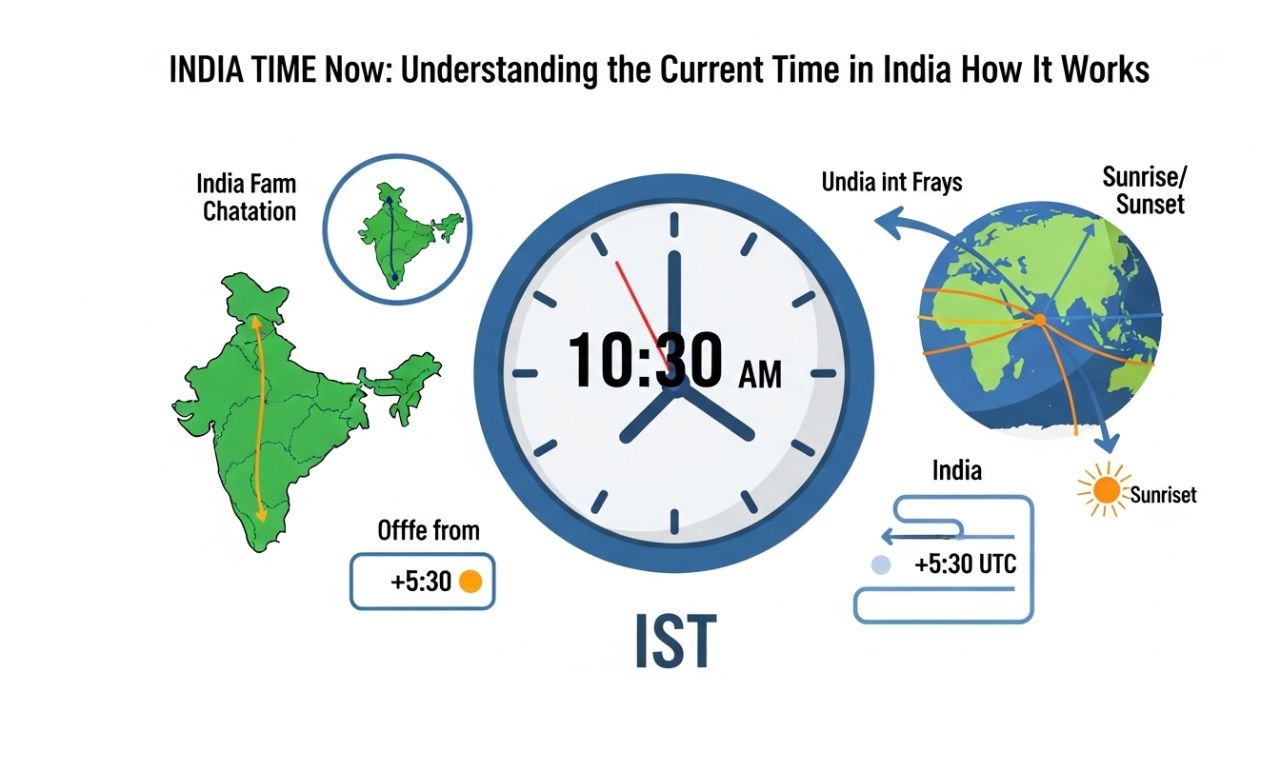
If you are searching for india time now, you are likely trying to check the current local time in India for business, travel, communication, or personal reasons. India follows a single standard time zone across the entire country, which makes it easier to coordinate schedules nationwide. However, understanding how this time zone works, its global offset, and how it compares to other countries can help you plan more effectively.
In this comprehensive guide, we will explore everything related to india time now, including India Standard Time, how it differs from other time zones, and why the country does not observe daylight saving time.
What Is India Time Now and Which Time Zone Does It Follow?
When people search for india time now, they are referring to the country’s official time standard known as Indian Standard Time (IST). IST is set at UTC+05:30, which means it is 5 hours and 30 minutes ahead of Coordinated Universal Time (UTC).
Unlike many large countries that have multiple time zones, India operates under one unified time system. This decision simplifies administration, transportation schedules, and nationwide broadcasting.
Why India Uses a Single Time Zone
India stretches across a wide longitudinal distance, from Gujarat in the west to Arunachal Pradesh in the east. Geographically, this could justify multiple time zones. However, after independence, the government decided to adopt a single national time to maintain consistency.
The reference longitude for IST is 82.5° East, which passes near Mirzapur in Uttar Pradesh. This central location was chosen to balance sunrise and sunset times across the country.
How India Time Now Compares to Other Countries
Understanding in dia time now becomes easier when you compare it to other major global time zones.
In dia Time Now vs United Kingdom
The United Kingdom follows Greenwich Mean Time (GMT) during standard time and British Summer Time (BST) during daylight saving months. IST is typically 5 hours and 30 minutes ahead of GMT and 4 hours and 30 minutes ahead during BST.
In dia Time Now vs United States
The United States has multiple time zones such as Eastern Standard Time (EST) and Pacific Standard Time (PST). Compared to EST, in dia time now is usually 10 hours and 30 minutes ahead during standard time. The difference may vary slightly during daylight saving adjustments in the U.S.
In dia Time Now vs Gulf Countries
Countries like the United Arab Emirates operate on Gulf Standard Time (UTC+04:00). India is 1 hour and 30 minutes ahead of the UAE. This relatively small time difference makes coordination between India and the Middle East easier for business and travel.
Why India Time Now Does Not Change for Daylight Saving
One important aspect of in dia time now is that it remains constant throughout the year. India does not observe daylight saving time (DST).
Reasons India Avoids Daylight Saving Time
-
Geographical Position – India lies closer to the equator compared to Europe or North America. Seasonal daylight variation is less extreme.
-
Administrative Simplicity – Changing clocks twice a year can create confusion in transportation, banking, and official schedules.
-
Energy Impact – Studies have shown minimal energy-saving benefits for India.
Because of these reasons, in dia time now stays at UTC+05:30 all year.
How India Time Now Is Determined Officially
The official time in India is maintained by the National Physical Laboratory (NPL) in New Delhi. Highly precise atomic clocks ensure accurate synchronization.
The time signals are distributed nationwide through telecommunications networks, television broadcasts, and internet servers. This ensures that in dia time now remains consistent across all states and union territories.
Historical Background
Before independence, India had multiple local time systems such as Bombay Time, Calcutta Time, and Madras Time. These regional times caused confusion, especially for railway schedules.
In 1947, India officially adopted Indian Standard Time as the single national time system. This move unified the country’s timekeeping and simplified communication and transportation.
Importance of Checking India Time Now for Businesses
In today’s global economy, knowing in dia time now is essential for international businesses, freelancers, and remote teams.
1. International Meetings
If you are scheduling meetings with clients in Europe or North America, understanding the time difference prevents missed calls and delays.
2. Stock Market Trading
The Indian stock exchanges operate according to IST. Investors outside India must convert their local time accurately to participate in market hours.
3. Outsourcing and IT Services
India is a major hub for IT services and outsourcing. Global companies often rely on knowing ind ia time now to coordinate projects and deadlines.
Travel and India Time Now
Travelers visiting India must adjust their watches to IST upon arrival. Since the country has one time zone, there is no need to change clocks while traveling domestically.
For international travelers, it is important to account for jet lag, especially if coming from countries with significant time differences such as the United States or Australia.
Digital Tools to Check India Time Now
Today, checking in dia time now is simple. You can use:
-
World clock features on smartphones
-
Search engines
-
International time conversion websites
-
Smart home devices
Most digital platforms automatically adjust for your location and display India’s current time accurately.
Geographic Impact on Sunrise and Sunset
Although in dia time now remains the same across the country, sunrise and sunset times vary significantly.
In eastern states like Assam, the sun rises much earlier compared to western states like Gujarat. This difference has sparked debates about introducing a second time zone for better daylight utilization. However, no official changes have been implemented.
Common Questions About
Is India Ahead or Behind Most Countries?
India is ahead of many European and African countries but behind Australia and New Zealand. Its UTC+05:30 offset makes it one of the few time zones with a half-hour difference.
Why Is India’s Time Zone 30 Minutes Off?
Most time zones differ by whole hours from UTC. India uses a half-hour offset because the chosen reference longitude (82.5° East) corresponds to 5 hours and 30 minutes ahead of UTC.
Does India Ever Change Its Time?
Currently, India does not change its clocks seasonally. In dia time now remains consistent year-round.
The Future of India Time Now
There have been discussions about splitting India into two time zones to improve productivity in the northeastern states. However, concerns about railway scheduling, administrative challenges, and national unity have delayed any changes.
For now, in dia time now continues to operate under a single unified system that supports the country’s diverse and vast population.
Conclusion:
Understanding in dia time now is more than just checking a clock. It plays a crucial role in global communication, business coordination, travel planning, and digital connectivity. With Indian Standard Time set at UTC+05:30 and no daylight saving adjustments, the country maintains a consistent and reliable time system throughout the year.
Whether you are scheduling an international meeting, planning a trip, or simply staying in touch with friends and family, knowing in dia time now ensures that you remain punctual and organized in an increasingly interconnected world.