
 By izzrish izz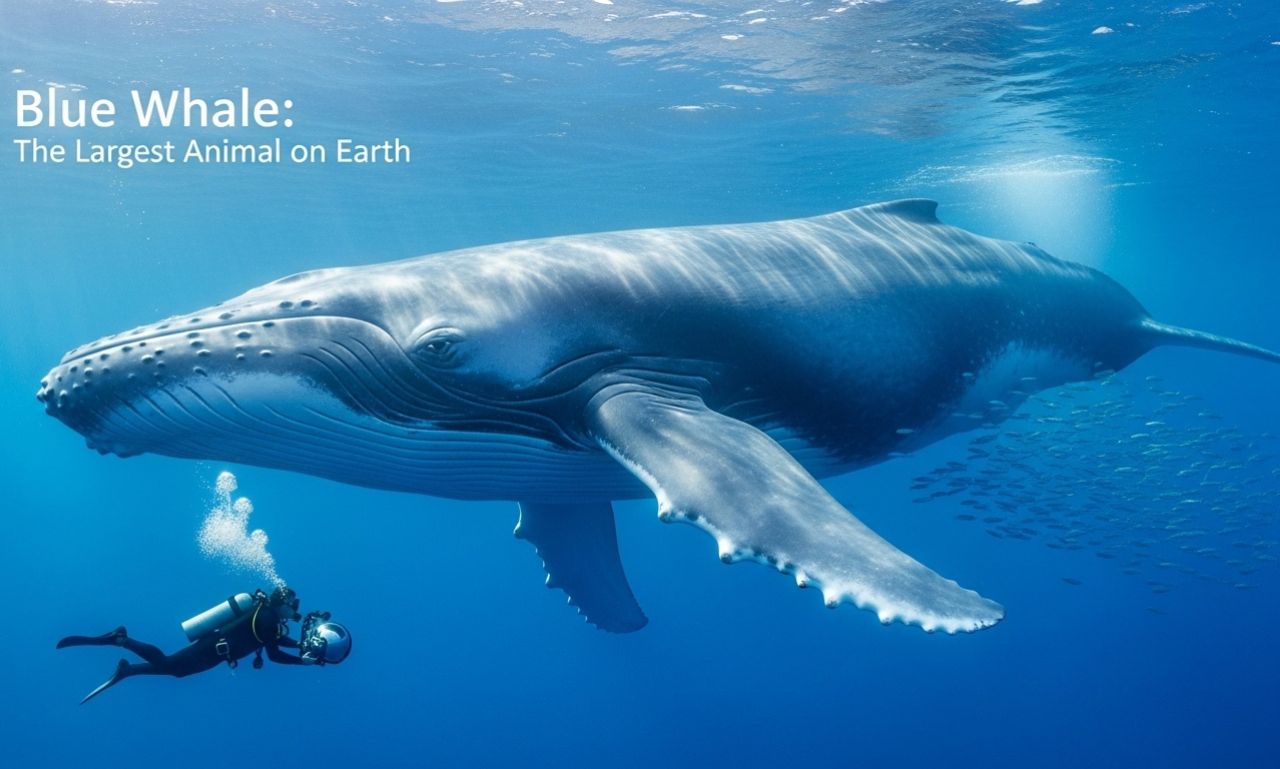
The Blue Whale is the biggest animal known to have ever lived on our planet. Even larger than the largest dinosaurs, this enormous marine mammal dominates the oceans with its incredible size and power. Blue whales are gentle giants that travel through the world’s oceans, feeding mainly on tiny shrimp-like animals called krill.
Despite their enormous size, blue whales were once close to extinction due to extensive commercial whaling in the 20th century. Today, international conservation efforts aim to protect and restore their populations.
Physical Characteristics
Blue whales are truly massive animals. An adult blue whale can reach lengths of up to 30 meters (about 98 feet) and weigh as much as 180 tons.
Some notable features include:
-
Long, streamlined body
-
Blue-gray skin with lighter mottled patterns
-
A broad, flat head
-
Two blowholes that create a tall spray when the whale surfaces
-
A large tail fluke used for powerful swimming
The heart of a blue whale alone can weigh around 180 kilograms (400 pounds) and is roughly the size of a small car.
Habitat and Distribution
Blue whales live in all the world’s major oceans, except the Arctic. They migrate long distances between feeding and breeding areas.
Major populations are found in waters near:
-
United States (particularly along the Pacific coast)
-
Chile
-
Australia
-
Sri Lanka
During the summer, blue whales travel to colder regions where food is abundant. In winter, they migrate to warmer waters to breed and give birth.
Diet and Feeding of Blue Whale
Despite their enormous size, blue whales feed almost exclusively on Krill.
They use a feeding technique called lunge feeding, where they open their mouths wide and take in huge volumes of water filled with krill. Their baleen plates filter out the water while trapping the tiny animals inside.
A single blue whale can consume up to 4 tons of krill per day during feeding season.
Communication and Sounds
Blue whales are known for producing some of the loudest sounds made by any animal. Their deep, low-frequency calls can travel hundreds of kilometers underwater.
Scientists believe these sounds help whales:
-
Communicate with other whales
-
Navigate through the ocean
-
Find potential mates
These powerful calls play an important role in blue whale social behavior.
Reproduction and Lifespan
Female blue whales typically give birth to one calf every two to three years. A newborn calf is already enormous, measuring about 7 meters (23 feet) long and weighing around 2.5 tons.
The calf drinks large quantities of rich milk and can gain up to 90 kilograms (200 pounds) per day during its early months.
Blue whales can live for 70 to 90 years, and scientists estimate their age by examining layers in their earwax.
Threats to Blue Whales
Although commercial whaling has mostly ended, blue whales still face several threats:
-
Ship collisions
-
Ocean noise pollution
-
Climate change affecting krill populations
-
Entanglement in fishing gear
These challenges can impact whale migration, feeding, and survival.
Conservation Efforts of Blue Whale
Blue whales are currently protected by international agreements such as those supported by the International Whaling Commission.
Organizations including the World Wide Fund for Nature support research, conservation programs, and public awareness campaigns to protect these magnificent animals.
Conclusion on Blue Whale
The blue whale is a remarkable symbol of the ocean’s power and beauty. As the largest animal ever to exist, it plays an important role in marine ecosystems and continues to inspire scientists and nature lovers worldwide. Protecting blue whales and their ocean habitats is essential to ensure that these gentle giants continue to thrive in our oceans.