
 By abdul aziz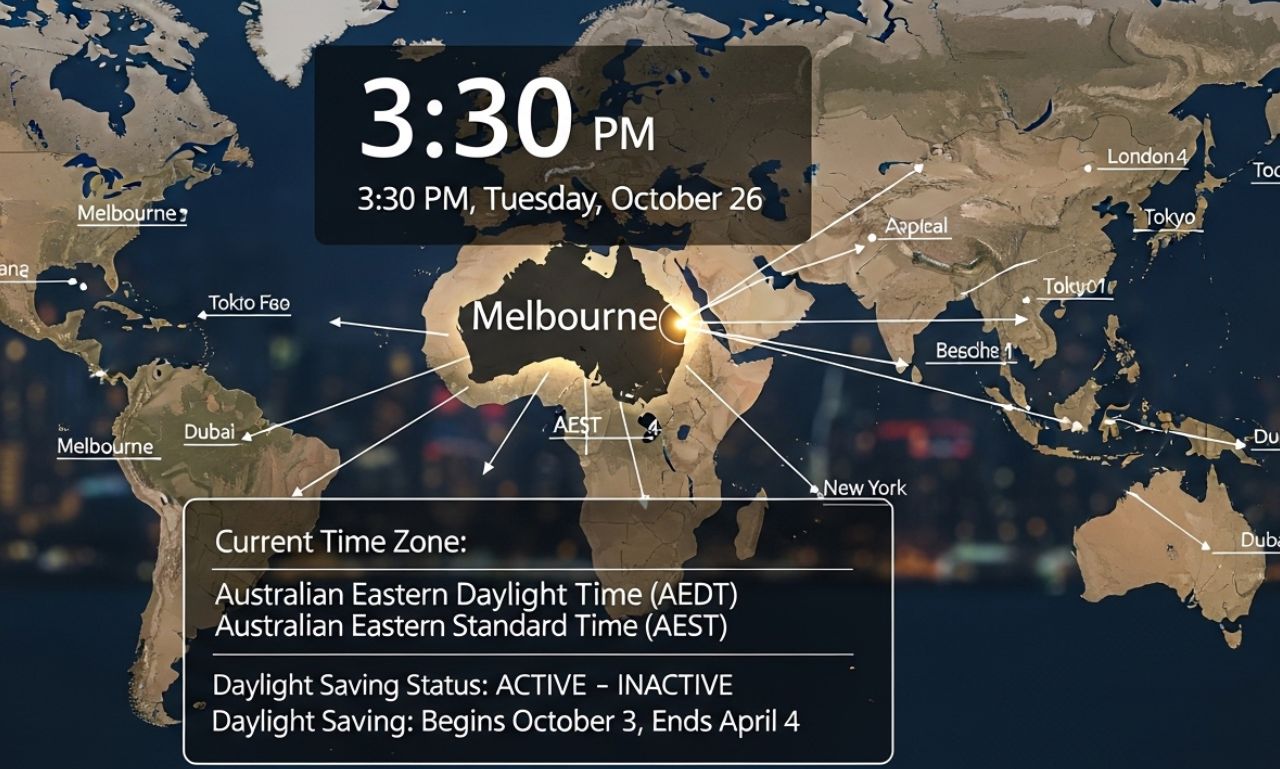
Understanding the time in Melbourne Australia is important whether you’re planning a trip, scheduling a business meeting, or connecting with friends and family overseas. Melbourne, one of Australia’s largest and most vibrant cities, operates within a specific time zone that changes during daylight saving periods.
Located in the southeastern part of the country, Melbourne follows the time regulations set by the state of Victoria. The city’s time can differ from other parts of Australia and significantly from countries across the world.
This guide explains the time zone used in Melbourne, how daylight saving works, and how the time in Melbourne Australia compares globally.
What Time Zone Does Melbourne Australia Use?
The standard time zone for Melbourne is:
Australian Eastern Standard Time (AEST)
-
UTC Offset: UTC +10:00
-
Applies during non-daylight saving months
AEST is also used by other major cities like Sydney and Brisbane (although Brisbane does not observe daylight saving).
When someone asks about the time in Melbourne Australia, the answer depends on whether daylight saving is in effect.
Daylight Saving Time in Melbourne
Melbourne observes Daylight Saving Time (DST).
Australian Eastern Daylight Time (AEDT)
-
UTC Offset: UTC +11:00
-
Typically starts in early October
-
Ends in early April
During daylight saving months, clocks move forward by one hour. This means the time in Melbourne Australia becomes one hour ahead of its standard time.
For example:
-
In winter: UTC +10
-
In summer: UTC +11
Daylight saving provides longer evening daylight during warmer months.
Why the Time in Melbourne Australia Changes
Australia is a large country divided into multiple time zones. The main ones include:
-
Australian Western Standard Time (AWST) – UTC +8
-
Australian Central Standard Time (ACST) – UTC +9:30
-
Australian Eastern Standard Time (AEST) – UTC +10
Melbourne falls under the eastern zone. Because each state can decide whether to observe daylight saving, time differences within Australia can vary seasonally.
For example, while Melbourne and Sydney move to daylight saving time, Brisbane in Queensland remains on standard time year-round. This creates temporary time differences between eastern cities.
Comparing Time in Melbourne Australia with Major Cities
Understanding global time differences helps when scheduling international calls or travel.
Melbourne vs London
London operates on:
-
UTC +0 (Greenwich Mean Time)
-
UTC +1 during British Summer Time
Melbourne is typically:
10 to 11 hours ahead of London, depending on daylight saving in both locations.
Melbourne vs New York
New York City operates on:
-
UTC -5 (Eastern Standard Time)
-
UTC -4 during daylight saving
Melbourne is usually:
-
14 to 16 hours ahead of New York, depending on seasonal clock changes.
Melbourne vs Dubai
Dubai operates on UTC +4 year-round.
Melbourne is:
-
6 to 7 hours ahead of Dubai, depending on daylight saving.
These differences show why confirming the time in Melbourne Australia is essential for international coordination.
How to Check the Current Time in Melbourne Australia
There are several reliable ways to check the exact current time:
-
World clock features on smartphones
-
Search engines (type “time in Melbourne Australia”)
-
International time zone websites
-
Digital assistant devices
Because of daylight saving shifts, it’s always best to verify the time before scheduling important meetings or travel.
The Importance of Time in Melbourne Australia for Business
Melbourne is a major financial and cultural hub. Many global companies operate offices there. Knowing the time in Melbourne Australia is especially important for:
-
International trade
-
Stock market activity
-
Virtual meetings
-
Remote work collaboration
For example, when it’s 9:00 AM in Melbourne during standard time, it may still be late evening in Europe or very early morning in North America.
Businesses often use time conversion tools to avoid confusion and missed appointments.
Travel Considerations and Jet Lag
Travelers visiting Melbourne should prepare for significant time differences, especially if arriving from Europe or North America.
Long-haul flights can lead to jet lag due to the time in Melbourne Australia being far ahead of many Western countries. Adjusting sleep schedules before departure can help reduce the impact.
Because Australia is in the Southern Hemisphere, seasons are opposite to those in Europe and North America. This also affects daylight hours and daily routines.
Interesting Facts About Melbourne and Time
-
Melbourne is located in the Southern Hemisphere.
-
Summer occurs from December to February.
-
Daylight saving begins in spring and ends in autumn.
-
The city is one of Australia’s most populated urban centers.
Its time zone aligns closely with Sydney but differs from Western Australia and South Australia.
Frequently Asked Questions About Time in Melbourne Australia
Does Melbourne change clocks twice a year?
Yes. Clocks move forward one hour in October and back one hour in April.
Is Melbourne always ahead of Sydney?
No. Melbourne and Sydney share the same time zone and daylight saving schedule.
How many hours ahead is Melbourne from UTC?
-
UTC +10 during standard time
-
UTC +11 during daylight saving time
Conclusion
The time in Me lbourne Australia operates on Australian Eastern Standard Time (UTC +10) and shifts to Australian Eastern Daylight Time (UTC +11) during daylight saving months. These seasonal changes make it essential to verify the current time before scheduling international meetings or travel.
Whether you’re connecting from London, New York, Dubai, or elsewhere, understanding Melbourne’s time zone ensures smooth communication and planning. With its global business presence and vibrant cultural life, staying aware of the time in Melb ourne Australia helps you stay connected to one of the world’s most dynamic cities.