
 By abdul aziz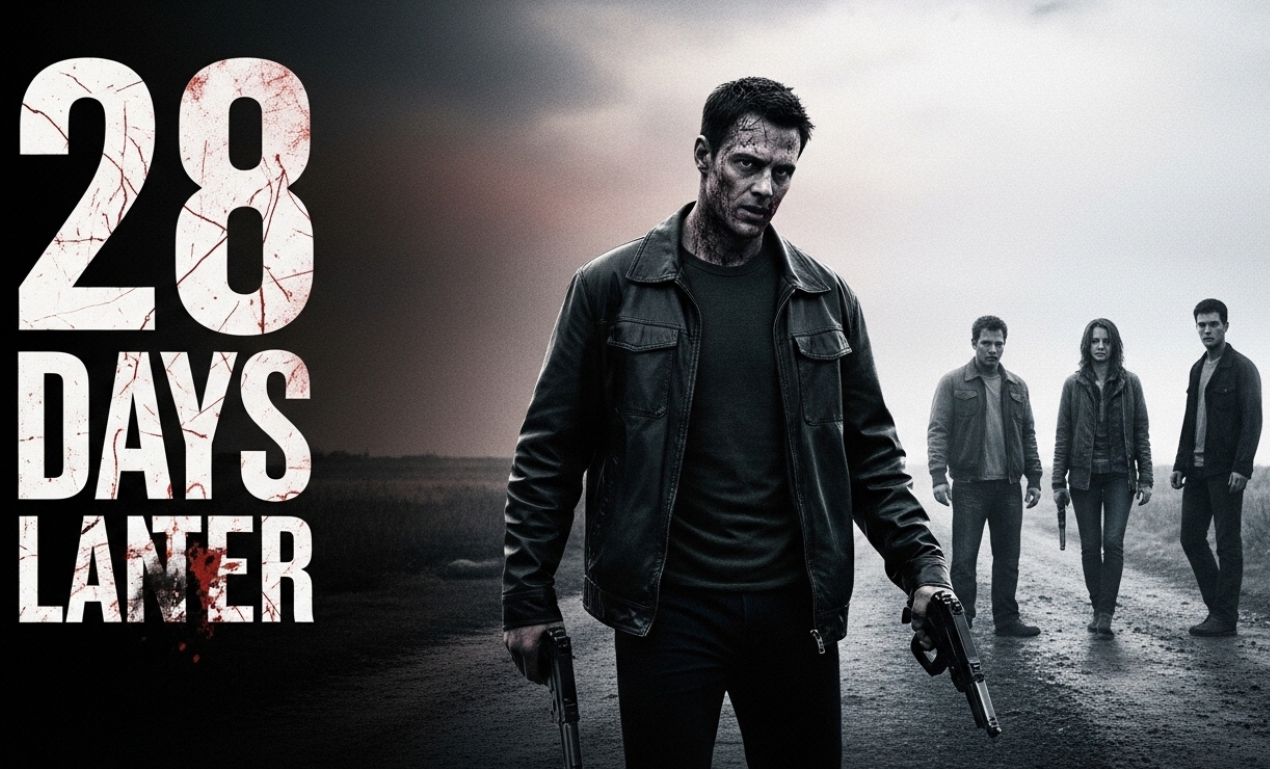
28 Days Later is more than just a horror film; it is a cultural landmark that reshaped modern zombie cinema. Released in 2002 and directed by Danny Boyle, the movie introduced audiences to a new kind of apocalypse—one fueled not by the supernatural, but by human error and viral catastrophe. Written by Alex Garland, the film combined psychological terror, social commentary, and raw survival drama to create an unforgettable cinematic experience.
Unlike traditional zombie films of the past, 28 Days Later presented fast-moving infected humans, intensifying the horror and redefining audience expectations. Its influence continues to shape the genre decades after its release.
The Plot of 28 Days Later
At the heart of 28 Days Later lies a simple but devastating premise. Animal rights activists break into a laboratory in London and unknowingly release a highly contagious virus known as “Rage.” The virus spreads within seconds of exposure to infected blood or saliva, turning ordinary people into violent, uncontrollable beings.
Twenty-eight days after the outbreak, a bicycle courier named Jim awakens from a coma in an abandoned hospital. Played by Cillian Murphy, Jim discovers a silent and deserted London. With no explanation and no sign of life, he ventures into the empty streets, slowly realizing that society has collapsed.
As Jim navigates this terrifying new world, he encounters other survivors, including Selena (Naomie Harris) and Mark. Together, they search for safety while avoiding both the infected and the darker side of humanity.
The Reinvention of the Zombie Genre
Before 28 Days Later, zombie films largely followed the blueprint established by George A. Romero. Slow-moving undead creatures dominated classics like Night of the Living Dead and Dawn of the Dead. While those films were groundbreaking in their time, audiences had grown familiar with their style.
28 Days Later changed everything by introducing infected individuals who could sprint, scream, and attack with relentless aggression. This transformation created a new level of urgency and realism. The infected were not resurrected corpses; they were living humans consumed by uncontrollable rage. This subtle shift made the horror feel plausible and immediate.
The fast-paced terror later influenced films like World War Z and even remakes such as Dawn of the Dead. The genre evolved because 28 Days Later dared to be different.
Visual Style and Cinematic Innovation
One of the most striking aspects of 28 Days Later is its visual presentation. Director Danny Boyle chose to shoot much of the film using digital video cameras rather than traditional film. This decision gave the movie a gritty, documentary-like appearance that enhanced its realism.
The deserted scenes of London—especially iconic landmarks like an empty Westminster Bridge—are haunting. The emptiness creates a sense of isolation rarely achieved in horror cinema. Rather than relying solely on jump scares, the film uses silence and vast open spaces to build tension.
The low-resolution digital aesthetic also contributed to the raw, unsettling atmosphere. It felt as though viewers were watching real footage of a societal collapse rather than a polished Hollywood production.
Themes Explored in 28 Days Later
Beyond the horror, 28 Days Later explores deeper themes about humanity, survival, and morality. The Rage virus acts as both a literal and symbolic force. It represents the thin line between civilization and chaos.
The Fragility of Society
The film demonstrates how quickly social order can collapse. Within days of the outbreak, government systems fail, infrastructure disappears, and survivors are left to fend for themselves. The emptiness of London emphasizes how fragile modern civilization truly is.
Human Nature in Crisis
As Jim and his companions travel beyond the city, they encounter a group of soldiers led by Major Henry West (Christopher Eccleston). What initially appears to be a safe haven soon reveals darker intentions.
This portion of 28 Days Later highlights a chilling truth: sometimes humans can be more dangerous than the infected. The film suggests that fear and desperation can corrupt even those who claim to protect others.
The Performances That Brought 28 Days Later to Life
A major reason for the film’s success lies in its performances. Cillian Murphy delivers a compelling portrayal of Jim’s transformation from confusion and fear to strength and resilience. His character evolves from a vulnerable survivor into someone capable of fierce determination.
Naomie Harris adds emotional depth as Selena, a pragmatic and hardened survivor who struggles to trust others. Their relationship develops naturally, grounding the film’s horror in genuine human connection.
Christopher Eccleston’s portrayal of Major West adds complexity to the narrative. His character is not a caricatured villain but a man shaped by extreme circumstances. This layered performance strengthens the film’s psychological dimension.
Cultural Impact and Legacy of 28 Days Later
The influence of 28 Days Later extends far beyond its initial release. It sparked renewed interest in post-apocalyptic storytelling and inspired numerous films, television series, and video games.
Many critics credit the film with paving the way for modern horror hits and revitalizing the zombie genre for a new generation. Its commercial success also led to the sequel, 28 Weeks Later, which expanded the story’s universe.
Even years later, filmmakers continue to draw inspiration from its blend of realism, social commentary, and high-intensity action. The concept of fast-moving infected creatures has become a genre staple.
Why 28 Days Later Still Matters Today
More than two decades after its release, 28 Days Later remains relevant. In an era shaped by global pandemics and social uncertainty, its themes feel eerily prophetic. The rapid spread of the Rage virus mirrors real-world anxieties about contagion and public health.
However, the film’s true strength lies in its focus on humanity. At its core, it is not just about infection or survival—it is about how people respond when everything familiar disappears.
The emotional weight, atmospheric storytelling, and moral complexity ensure that the film continues to resonate with new audiences.
Conclusion:
28 Days Later stands as one of the most influential horror films of the 21st century. By reinventing genre conventions, embracing digital cinematography, and exploring profound themes, it transformed what audiences expected from zombie cinema.
Its combination of relentless tension, emotional storytelling, and social commentary elevated it beyond typical horror fare. Under the visionary direction of Danny Boyle and the sharp writing of Alex Garland, the film became a benchmark for modern apocalyptic storytelling.
For anyone interested in horror, cinema history, or powerful character-driven narratives, 28 Days Later remains essential viewing. Its legacy continues to shape the genre, proving that true horror lies not only in monsters—but in ourselves.