
 By abdul aziz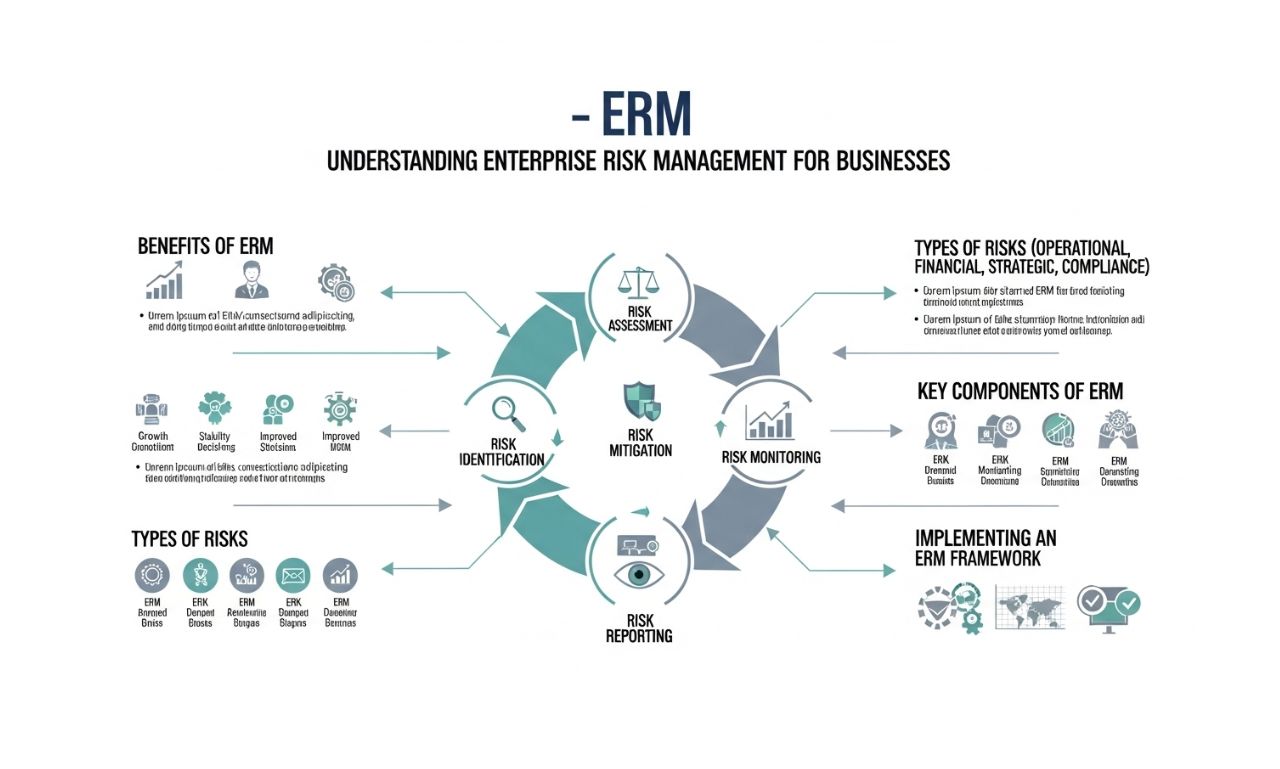
ERM, or Enterprise Risk Management, is a systematic approach that organizations use to identify, assess, and manage risks across all areas of a business. Unlike traditional risk management, which often focuses on specific departments or functions, ERM provides a holistic view of potential threats and opportunities. By implementing ERM, companies can make informed decisions, protect assets, and achieve strategic objectives while minimizing losses.
ERM is critical for businesses of all sizes, as it helps anticipate uncertainties such as financial fluctuations, regulatory changes, operational challenges, cyber threats, and reputational risks.
Key Components of ERM
1. Risk Identification
The first step in ERM is identifying potential risks that could impact the organization. Risks can be financial, operational, strategic, regulatory, or reputational. Businesses often use tools like risk assessments, audits, and scenario analysis to uncover potential threats.
2. Risk Assessment
Once risks are identified, ERM requires organizations to analyze their likelihood and potential impact. This helps prioritize which risks need immediate attention and which can be monitored over time.
3. Risk Mitigation
ERM involves developing strategies to reduce or control risks. Mitigation may include implementing internal controls, creating contingency plans, transferring risk via insurance, or diversifying investments.
4. Risk Monitoring and Reporting
ERM is an ongoing process. Organizations must continuously monitor risks and report them to stakeholders, including management and the board of directors. This ensures risks are managed proactively rather than reactively.
5. Risk Culture
A strong ERM framework promotes a risk-aware culture across the organization. Employees at all levels understand potential risks and contribute to mitigating them, fostering accountability and informed decision-making.
Benefits of Implementing ERM
Implementing ERM provides numerous advantages for businesses:
-
Proactive Risk Management: Anticipates threats before they become crises.
-
Better Decision-Making: Informs strategic planning with risk insights.
-
Regulatory Compliance: Helps meet legal and industry requirements.
-
Financial Stability: Reduces unexpected losses and operational disruptions.
-
Enhanced Reputation: Builds stakeholder trust by demonstrating responsible management.
ERM Frameworks and Standards
Several widely recognized ERM frameworks guide organizations in implementing effective risk management:
-
COSO ERM Framework: Provides a structured approach to identify, assess, and respond to risks.
-
ISO 31000: International standard for risk management principles and guidelines.
-
FERMA (Federation of European Risk Management Associations): Focuses on best practices for European organizations.
Choosing the right framework depends on an organization’s size, industry, and regulatory environment.
ERM Process: Step by Step
-
Set Objectives: Define business goals and risk appetite.
-
Identify Risks: Conduct enterprise-wide risk assessments.
-
Analyze Risks: Evaluate the likelihood and potential impact.
-
Develop Responses: Determine strategies for mitigation, transfer, acceptance, or avoidance.
-
Implement Controls: Assign responsibilities and deploy mitigation measures.
-
Monitor and Review: Continuously track risks and adjust strategies as needed.
This cycle ensures that ERM remains dynamic and responsive to evolving business conditions.
Challenges in ERM Implementation
Despite its benefits, ERM can face challenges such as:
-
Resistance to Change: Employees may be reluctant to adopt new processes.
-
Data Limitations: Incomplete or inaccurate data can hinder risk analysis.
-
Integration Issues: ERM must align with existing business operations and strategy.
-
Resource Constraints: Effective ERM requires dedicated personnel and technology.
Organizations that address these challenges proactively can realize the full value of ERM.
ERM in the Modern Business Environment
In today’s complex business landscape, ERM is more critical than ever. Companies face cyber threats, global economic volatility, environmental regulations, and reputational risks. By adopting a strong ERM framework, businesses can stay ahead of uncertainties, respond effectively to crises, and maintain a competitive advantage.
The use of technology, data analytics, and AI in ERM is growing, allowing organizations to predict potential risks more accurately and make data-driven decisions.
Conclusion:
ERM is an essential tool for modern organizations seeking to manage risks holistically. By integrating ERM into strategic planning, companies gain clarity on potential threats, improve decision-making, and protect their assets. A robust ERM framework fosters a culture of risk awareness, ensuring that the organization is resilient, adaptable, and prepared for the challenges of today and tomorrow.