
 By izzrish izz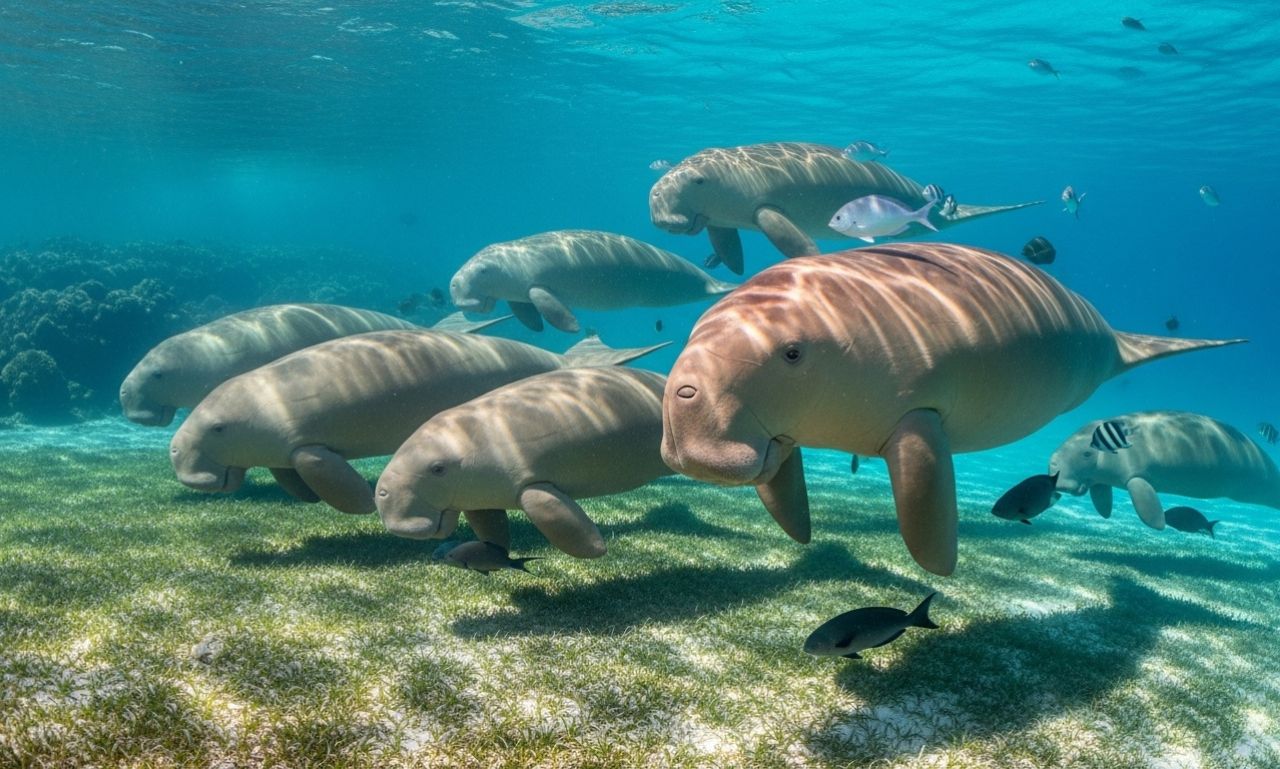
The dugong (Dugong dugon) is a large marine mammal known for its peaceful nature and plant-based diet. Often called a “sea cow,” the dugong spends most of its life grazing on underwater seagrass meadows in warm coastal waters. It belongs to the order Sirenia, which also includes manatees.
Dugongs have existed for millions of years and are one of the few strictly herbivorous marine mammals. These gentle creatures play an important role in maintaining healthy marine ecosystems, especially seagrass habitats.
Physical Characteristics
Dugongs have a smooth, streamlined body that helps them move easily through water.
Key physical features include:
-
Large, torpedo-shaped body
-
Rounded snout designed for grazing
-
Paddle-like front flippers
-
Whale-like tail fluke
-
Thick gray or brown skin
Size and Weight of Dugong
Adult dugongs are fairly large marine mammals.
-
Length: 2.5–3 meters (8–10 feet)
-
Weight: 250–400 kg (550–880 pounds)
Their bodies are covered with sparse hairs, and their snouts point downward to help them feed on seagrass along the ocean floor.
Habitat and Distribution
Dugongs live in warm coastal waters of the Indo-Pacific region.
Their range includes:
-
Northern Australia
-
The Red Sea
-
Coastal waters of East Africa
-
India
-
Southeast Asia
-
Parts of the Western Pacific
Dugongs prefer shallow coastal areas where seagrass grows in large underwater meadows.
Diet and Feeding Behavior
Dugongs are strict herbivores, meaning they eat only plants.
Their diet mainly consists of:
-
Seagrass species
-
Marine algae (occasionally)
Dugongs use their strong, bristly lips to dig into the seabed and pull out seagrass roots. While feeding, they leave visible feeding trails on the ocean floor.
An adult dugong may consume up to 30 kilograms (66 pounds) of seagrass per day.
Behavior and Lifestyle of Dugong
Dugongs are generally slow-moving and peaceful animals.
Typical behaviors include:
-
Swimming slowly along the seabed
-
Surfacing every few minutes to breathe
-
Resting underwater between feeding sessions
They are usually found alone or in small groups, although larger gatherings may occur in areas with abundant food.
Reproduction and Life Cycle
Dugongs reproduce slowly, which makes their populations vulnerable to decline.
Reproductive facts:
-
Gestation period: about 13–14 months
-
Usually one calf at a time
-
Calves stay with their mothers for 1–2 years
Young dugongs nurse underwater and remain close to their mothers for protection and learning feeding habits.
Dugongs can live up to 70 years, making them one of the longer-lived marine mammals.
Ecological Importance
Dugongs are extremely important for maintaining healthy seagrass ecosystems.
Their grazing helps:
-
Promote seagrass growth
-
Prevent overgrowth of older plants
-
Maintain biodiversity in coastal habitats
Healthy seagrass beds also support many marine species such as fish, turtles, and crustaceans.
Conservation Status of Dugong
The dugong is currently classified as Vulnerable by conservation organizations.
Major threats include:
-
Loss of seagrass habitats
-
Fishing net entanglement
-
Boat strikes
-
Water pollution
-
Coastal development
In some regions, dugongs are also hunted for meat and oil, although many countries now protect them by law.
Dugongs and Cultural History
Dugongs have been part of coastal cultures for centuries. Some historians believe that sightings of dugongs may have contributed to ancient myths about mermaids, especially when sailors saw mothers nursing their calves near the water’s surface.
Today, dugongs are important symbols of marine conservation and biodiversity.
Conclusion on Dugong
The dugong is a gentle marine mammal that plays a vital role in maintaining healthy seagrass ecosystems. With its peaceful nature, unique feeding habits, and long lifespan, it remains one of the most fascinating animals of the Indo-Pacific region. Protecting dugongs and their habitats is essential for preserving marine biodiversity and ensuring the survival of these remarkable sea cows.