
 By abdul aziz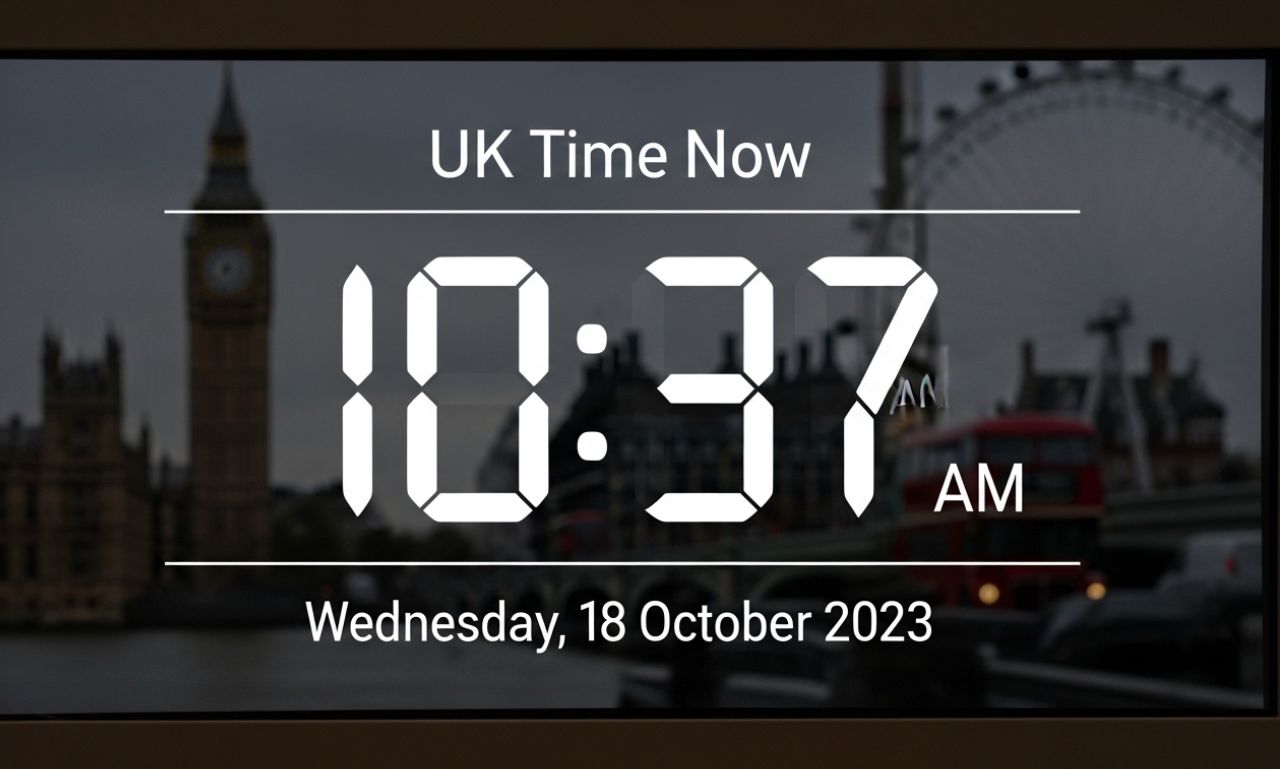
In today’s interconnected world, knowing the UK Time Now is essential for businesses, travelers, remote workers, and anyone communicating across borders. Whether you are scheduling a virtual meeting, planning an international trip, or tracking global markets, understanding the current time in the United Kingdom helps you stay organized and punctual. The UK follows a structured time system with seasonal adjustments that can affect everything from flight schedules to financial transactions.
What Is UK Time Now and How Is It Determined?
The phrase UK Time Now refers to the current local time observed in the United Kingdom. The UK primarily follows Greenwich Mean Time (GMT) during the winter months and switches to British Summer Time (BST) during the summer.
The time standard is historically linked to the Prime Meridian located at the Royal Observatory, Greenwich. This location established Greenwich Mean Time as the global reference for timekeeping. During winter, the UK operates on GMT (UTC+0). In summer, clocks move forward by one hour to BST (UTC+1), typically starting in late March and ending in late October.
This seasonal shift means that the UK Time Now depends not only on the date but also on whether daylight saving time is in effect.
UK Time Now in England, Scotland, Wales, and Northern Ireland
A common question people ask is whether different regions within the UK follow different time zones. The answer is simple: the entire United Kingdom operates on the same time system.
The UK consists of:
-
England
-
Scotland
-
Wales
-
Northern Ireland
All these countries observe the same standard time. So when you check the UK Tim e Now, it applies uniformly whether you are in London, Edinburgh, Cardiff, or Belfast.
The Role of Greenwich Mean Time in UK Time Now
Understanding UK Tim e Now requires some knowledge of Greenwich Mean Time. GMT originated in the 19th century when railways and communication systems required standardized timekeeping.
The Prime Meridian at Greenwich became the international reference point for global time zones. GMT later evolved into Coordinated Universal Time (UTC), which is now the modern standard. However, GMT remains a commonly used term in the UK, especially during the winter months.
When someone refers to the UK Tim e Now in winter, they typically mean GMT (UTC+0). During summer, it shifts to British Summer Time (UTC+1).
British Summer Time and Seasonal Changes
Another important factor influencing UK Ti me Now is British Summer Time (BST). The UK adjusts its clocks forward by one hour in spring to make better use of daylight during the evenings.
When Does the UK Change Its Time?
-
Clocks go forward one hour on the last Sunday in March.
-
Clocks go back one hour on the last Sunday in October.
This system provides longer evening daylight in summer months, helping reduce energy consumption and encouraging outdoor activities.
However, this change can cause confusion for international meetings. Always double-check the UK Ti me Now during seasonal transitions to avoid scheduling errors.
Why UK Time Now Matters for Businesses
The United Kingdom is home to one of the world’s largest financial hubs, the London Stock Exchange. For global investors and multinational companies, tracking the UK Ti me Now is critical for:
-
Trading hours
-
Business meetings
-
Customer service operations
-
International deadlines
London’s financial markets open and close according to UK local time, meaning seasonal clock changes directly impact global market coordination.
Companies operating across continents must carefully monitor the UK Ti me Now to align with partners in Europe, North America, and Asia.
UK Time Now Compared to Other Major Time Zones
Understanding time differences helps prevent costly mistakes. Here’s how the UK Ti me Now compares with other major regions:
-
United States (Eastern Time): Typically 5 hours behind GMT
-
Central Europe: 1 hour ahead of GMT
-
India: 5 hours 30 minutes ahead of GMT
-
Australia (Sydney): Around 10 hours ahead of GMT
These differences can shift slightly during daylight saving transitions, since not all countries adjust clocks on the same dates.
How Technology Displays
Modern devices automatically update the UK Ti me Now through internet time servers and satellite synchronization. Smartphones, laptops, and smartwatches typically detect your location and adjust time settings accordingly.
Online world clocks and digital assistants also provide real-time updates. This makes it easier than ever to verify the correct time before joining meetings or booking travel.
However, manual clocks and older systems may require adjustment during seasonal changes. Always double-check during March and October to ensure accuracy.
Travel
For travelers arriving in the United Kingdom, understanding the UK Ti me Now is essential for managing jet lag and transport schedules.
Major airports such as Heathrow and Gatwick operate strictly according to UK local time. International passengers should confirm arrival and departure times based on the current UK time zone setting.
Failing to adjust for daylight saving changes can result in missed flights or delayed connections.
Historical Background of UK Timekeeping
The concept of standardized time in Britain dates back to the railway expansion of the 1840s. Before GMT was adopted nationwide, towns used local solar time, creating confusion for train schedules.
The adoption of Greenwich Mean Time unified the country and eventually influenced global timekeeping standards. The Prime Meridian’s global significance cemented the UK’s role in international time regulation.Today, the UK Ti me Now remains closely tied to this historical legacy.
Common Misconceptions About UK Time Now
There are several misunderstandings about UK time:
-
Some believe London has a separate time zone from the rest of the UK — it does not.
-
Others confuse GMT with BST — they are seasonally different.
-
Many assume all countries change clocks simultaneously — this is not true.
Clarifying these misconceptions helps individuals and businesses accurately track the UK Ti me Now without confusion.
Future Debates About
There have been discussions in recent years about whether the UK should permanently remain on BST to reduce winter darkness. However, no permanent changes have been implemented.
Any official adjustment would significantly impact the UK T ime Now system and its alignment with global markets.
For now, the UK continues to follow its traditional seasonal clock changes.
Conclusion
Knowing the UK Ti me No w is more than just checking a clock. It involves understanding Greenwich Mean Time, British Summer Time, and seasonal adjustments that influence daily life, business operations, and international communication.
From its origins at the Royal Observatory in Greenwich to its role in global finance and travel, UK timekeeping has shaped modern scheduling systems worldwide. Whether you are planning a meeting, booking a flight, or trading stocks, staying updated with the current UK time ensures accuracy and efficiency.
By keeping track of daylight saving changes and time zone differences, you can confidently coordinate with the United Kingdom at any time of year.