
 By abdul aziz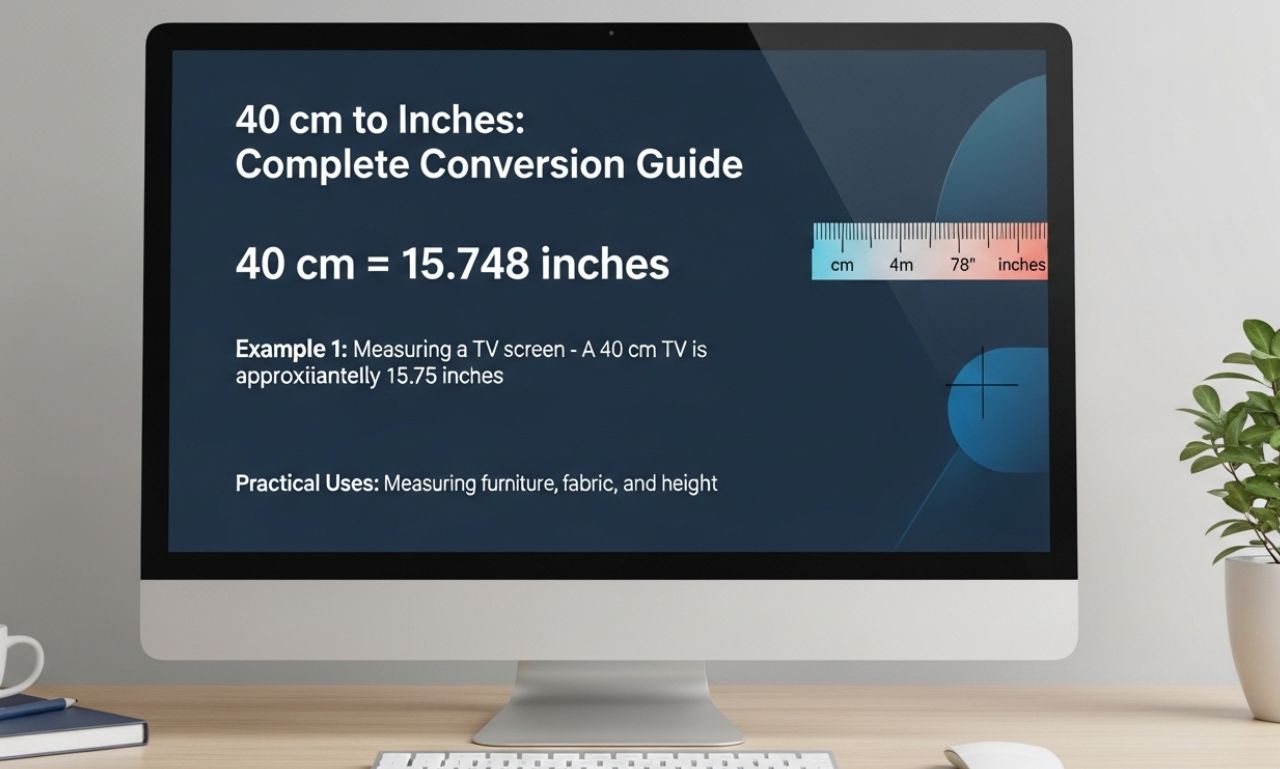
Understanding 40 c m to inches is essential when converting measurements between the metric and imperial systems. Whether you are measuring furniture, checking product dimensions, working on a school assignment, or handling construction tasks, knowing how to convert centimeters to inches can save time and prevent mistakes. In this detailed guide, we will explore how to convert 40 c m to inches, explain the formula, provide practical examples, and discuss why this conversion is commonly needed.
By the end of this article, you will clearly understand how 40 centimeters translates into inches and how to perform similar conversions confidently.
What Is 40 cm to Inches?
The measurement 40 c m to inches refers to converting 40 centimeters from the metric system into inches in the imperial system. Since centimeters and inches belong to two different measurement systems, a standard conversion factor is used.
The formula to convert centimeters to inches is:
1 centimeter = 0.3937 inches
To convert 40 centimeters into inches:
40 × 0.3937 = 15.748 inches
So, 40 cm equals approximately 15.75 inches when rounded to two decimal places.
This conversion is widely used in daily life, especially when dealing with international measurements.
Understanding the Formula Behind 40 cm to Inches
To fully understand 40 c m to inches, it is important to know the mathematical formula behind the conversion.
Conversion Formula
Inches = Centimeters × 0.3937
When applying the formula:
-
Centimeters = 40
-
Multiply 40 by 0.3937
-
Result = 15.748 inches
For simplicity, most people round the result to 15.75 inches.
Why 0.3937?
The number 0.3937 comes from the relationship between centimeters and inches. Since:
-
1 inch = 2.54 centimeters
To find how many inches are in one centimeter, divide 1 by 2.54:
1 ÷ 2.54 = 0.3937
This constant makes conversion quick and accurate.
Step-by-Step Guide to Convert 40 cm to Inches
If you are wondering how to calculate 40 c m to inches manually, follow these simple steps:
Step 1: Write the Formula
Inches = Centimeters × 0.3937
Step 2: Insert the Value
Inches = 40 × 0.3937
Step 3: Multiply
40 × 0.3937 = 15.748
Step 4: Round the Result
15.748 ≈ 15.75 inches
This straightforward method works for any centimeter-to-inch conversion.
Why Is 40 cm to Inches Important?
Many countries use different measurement systems. Most of the world follows the metric system, while countries like the United States use the imperial system.
Here are common situations where converting 40 c m to inches is useful:
1. Furniture Measurements
If a table, shelf, or TV stand is listed as 40 cm in width or height, converting to inches helps buyers in imperial-system countries understand the size more clearly.
2. Clothing and Accessories
Belt lengths, bag sizes, and other accessories are often measured in centimeters. Converting to inches makes it easier for international shoppers.
3. DIY and Construction
Woodworking, home renovation, and crafting projects often require precise measurements. Knowing 40 cm equals about 15.75 inches ensures accuracy.
4. School and Academic Work
Students frequently need to convert units in math and science classes.
Real-Life Examples of 40 cm to Inches
Understanding theoretical conversions is helpful, but real-world examples make it clearer.
Example 1: Laptop Size
A laptop sleeve might measure 40 cm in length. Converting 40 c m to inches tells us it is about 15.75 inches long.
Example 2: Wall Shelf
If a decorative shelf measures 40 cm wide, that equals roughly 15.75 inches — helpful when planning wall space.
Example 3: Mirror Frame
A mirror frame with a 40 cm diameter is about 15.75 inches across.
These practical examples show how frequently this measurement appears in everyday life.
Quick Conversion Table Around 40 cm to Inches
Here is a helpful comparison table:
-
38 cm = 14.96 inches
-
39 cm = 15.35 inches
-
40 cm = 15.75 inches
-
41 cm = 16.14 inches
-
42 cm = 16.54 inches
This helps when you need nearby values for quick reference.
Metric vs Imperial: Why Conversions Matter
Understanding 40 c m to inches also highlights the difference between measurement systems.
Metric System
-
Based on meters
-
Used globally
-
Easy decimal-based calculations
Imperial System
-
Based on inches, feet, yards
-
Common in the United States
-
Often used in manufacturing and construction
Because global trade and online shopping connect different regions, unit conversions have become increasingly important.
Common Mistakes When Converting 40 cm to Inches
Even simple conversions can lead to errors. Here are some common mistakes:
1. Using the Wrong Conversion Factor
Some people mistakenly multiply by 2.54 instead of dividing or multiplying by 0.3937.
2. Rounding Too Early
Rounding the number before completing the multiplication can slightly change the final result.
3. Mixing Units
Always ensure you are converting centimeters to inches and not confusing centimeters with millimeters.
Avoiding these mistakes ensures accurate results.
How to Convert Inches Back to Centimeters
Understanding 40 cm to inches also means knowing how to reverse the calculation.
To convert inches to centimeters:
Centimeters = Inches × 2.54
For example:
15.75 × 2.54 = 40.005 cm
This confirms the accuracy of the original conversion (small rounding differences are normal).
Digital Tools for 40 cm to Inches Conversion
Today, you do not always need to calculate manually. You can use:
-
Online unit converters
-
Smartphone calculator apps
-
Search engine quick answers
-
Spreadsheet formulas
However, understanding the formula helps verify results and improves your math skills.
Frequently Asked Questions About 40 cm to Inches
Is 40 cm exactly 16 inches?
No, 40 cm equals approximately 15.75 inches, which is slightly less than 16 inches.
How many feet is 40 cm?
Since 12 inches make 1 foot:
15.75 ÷ 12 = 1.31 feet (approximately).
Is 40 cm considered large?
It depends on context. For example:
-
40 cm is a moderate laptop width.
-
It is a relatively small table height.
-
It is larger than standard school rulers.
Final Thoughts
Converting 40 c m to inches is simple once you understand the formula and method. By multiplying 40 by 0.3937, you get approximately 15.75 inches. This conversion is essential in shopping, education, construction, and everyday measurements.
As global communication continues to grow, knowing how to convert between metric and imperial systems becomes increasingly valuable. Whether you calculate manually or use digital tools, understanding the logic behind the numbers ensures accuracy and confidence.
The next time you encounter 40 centimeters, you will instantly know it equals about 15.75 inches — making your measurements clearer and more practical.